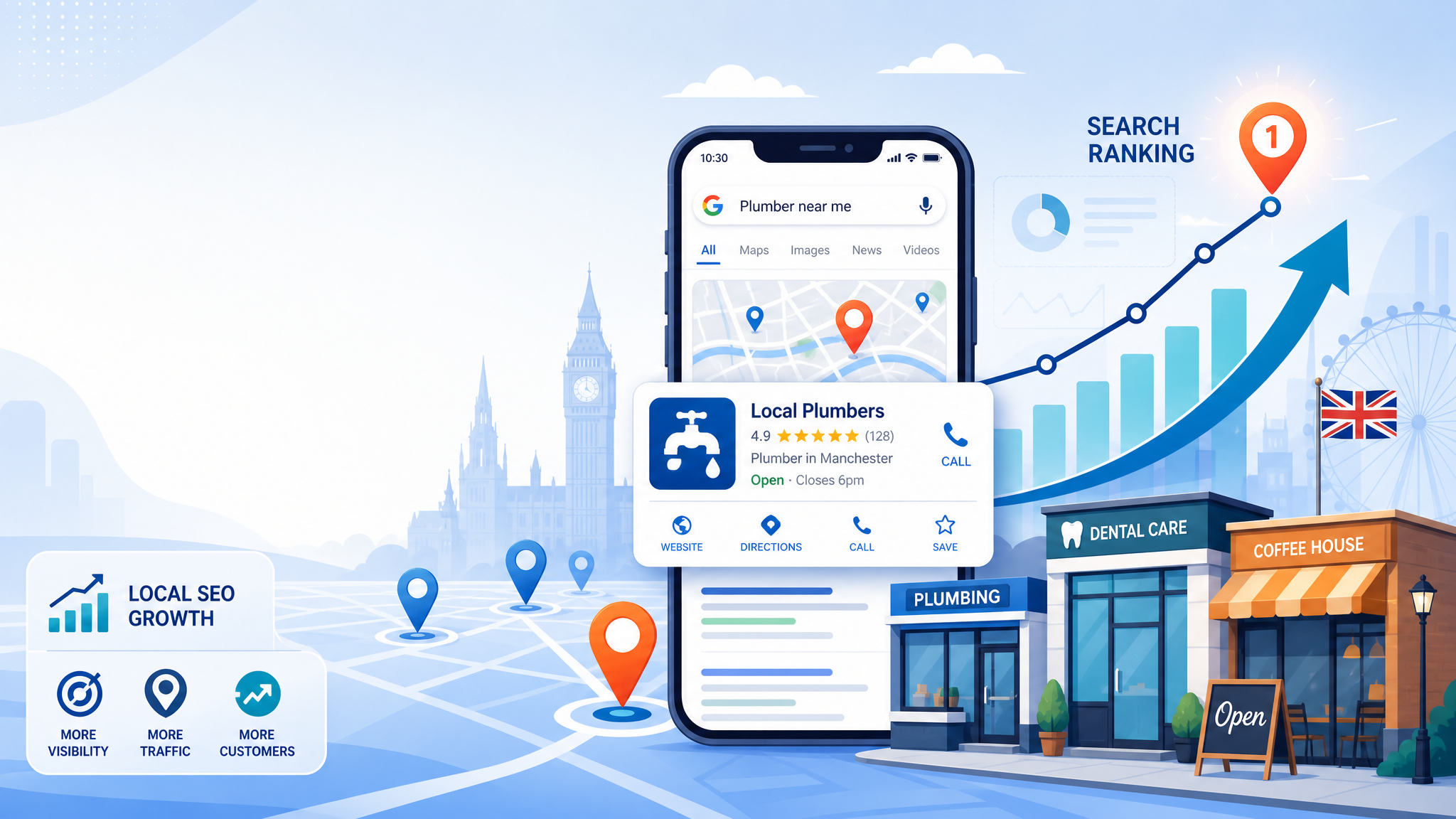
Your homepage often gets the most links, the most visits, and the most weight in Google’s eyes. So if you’re asking, “How do I optimise a website homepage for local SEO?”, this is usually the first place to fix. A well-optimised homepage helps search engines understand where you work, what you do, and which local searches you should appear for. It also helps real people decide whether to click, call, or keep scrolling. In 2026, local SEO isn’t about cramming in town names everywhere. It’s about clarity, relevance, trust, and a technically solid page that supports both rankings and conversions.
Start With Clear Local Search Intent On The Homepage
Before you change a single heading or meta tag, define the local intent your homepage is meant to serve. Your homepage should usually target your primary service area and your broadest core offer, not every service in every town you cover.
If you’re a solicitor in Leeds, for example, your homepage might target terms around solicitors in Leeds or Leeds law firm, while individual service pages handle things like family law, conveyancing, or employment disputes. That keeps your homepage focused and avoids muddled relevance.
Ask yourself three questions:
- Where are you based or primarily serving?
- What is your main commercial service category?
- What would a local customer actually search?
This matters because Google is better than ever at matching intent, not just matching phrases. If your homepage tries to rank for everything, it often ends up ranking well for nothing. Keep the homepage aligned to your main local search theme, then support it with strong internal pages for secondary locations or specialist services.
Write Homepage Copy That Signals Location And Services Naturally
Once your target intent is clear, your homepage copy needs to reinforce it in plain English. That means using your town, city, or region naturally alongside your main service language.
Your H1, opening paragraph, hero text, and supporting sections should make it obvious what you do and where you do it. Not robotic. Not stuffed. Just clear.
A good homepage often includes:
- Your primary service category
- Your core location
- A short value proposition
- Mentions of the surrounding service area where relevant
For example: “We provide same-day boiler repairs across Bristol and the surrounding areas” is far stronger than vague copy like “trusted heating solutions for all your needs”.
You can also mention local landmarks, neighbourhoods, or counties where it genuinely helps users. But don’t overdo it. If every sentence includes a place name, it starts reading like SEO bait. The best local homepage copy sounds like something a real business would say to a local customer standing right in front of them.
Optimise Key SEO Elements For Local Relevance
Your visible copy does a lot of work, but core SEO elements still matter. Start with the title tag. It should include your main service and primary location, while still sounding clickable in search results. A format like Primary Service in Location | Business Name still works well.
Next, tighten your meta description. It isn’t a direct ranking factor, but it can improve click-through rate. Include the location, service, and a reason to choose you.
Then review these on-page elements:
- H1: one clear heading with service and location intent
- URL: keep it clean: your homepage URL is fine as the root domain
- Image alt text: describe images properly, adding local context only when accurate
- Intro copy: place your primary local phrase early without forcing it
Also check whether your homepage competes with a location page targeting the same keyword. If both pages chase the same phrase, you may confuse search engines. One page should own that target. Local SEO usually improves when every important keyword has a clear page-level home.
Strengthen Trust With Business Details, Reviews, And Local Proof
Local rankings aren’t only about relevance. Trust and prominence matter too. Your homepage should quickly prove that your business is real, established, and active in the area.
Start with the basics: display your business name, address, phone number, and opening hours clearly. If you have a physical premises, include the full address in the footer or contact area. If you’re a service-area business, be accurate about that instead of pretending to have a high street office you don’t use.
Then bring in local proof:
- Short review snippets from local customers
- Case studies tied to nearby areas
- Photos of your premises, team, vans, or completed work
- Memberships, accreditations, and local awards
Google’s local systems look for signals of real-world credibility. So do people. A few believable reviews that mention your area can do more than a paragraph of self-praise. The homepage should answer the quiet question every visitor has: “Are these people genuinely local, and can I trust them?”
Use Internal Links And Conversion Elements To Support Local Rankings
A homepage should guide both users and crawlers to the pages that matter most. That’s where internal linking comes in. Link prominently to your core service pages, location pages, contact page, and about page using descriptive anchor text.
For example, Emergency Plumber in Sheffield is more useful than Click here. It gives search engines context and helps distribute authority from the homepage to deeper pages.
Just as important, add conversion elements that match local intent. If someone lands on your homepage from a local search, they often want to act quickly. Make that easy with:
- A visible phone number
- Clear call-to-action buttons
- A short enquiry form
- Directions or service-area details
- Mobile-friendly click-to-call options
This affects SEO indirectly. Better engagement, stronger user signals, and more completed actions all support performance over time. And frankly, ranking without converting is a hollow win. Your homepage should not only attract local traffic, but help turn that traffic into leads.
Add Local Business Schema And Technical Homepage Essentials
If you want a stronger local SEO homepage, the technical layer matters. Start with LocalBusiness schema or a more specific subtype, such as Dentist, LegalService, or PlumbingService. This structured data helps search engines understand your business details, service area, opening hours, and contact information.
Make sure the schema matches what’s visibly shown on the page. Inconsistencies can weaken trust.
Then cover the essentials:
- Fast loading times
- Strong mobile usability
- HTTPS security
- Crawlable page content
- Proper canonical setup
- No intrusive pop-ups blocking the main content
Your homepage should also connect cleanly to your Google Business Profile, with the same business details used consistently across your site and directory listings. This is often called NAP consistency: name, address, and phone number.
Technical issues won’t always destroy local visibility overnight. But they can quietly hold you back, especially in competitive areas where several businesses have similar relevance and authority.
Track Local SEO Performance And Refine What The Homepage Targets
Homepage local SEO is not a one-off task. You need to measure whether the page is actually improving visibility for the right searches.
Track performance in Google Search Console and your analytics platform. Look at impressions, clicks, click-through rate, and queries tied to your homepage. Are you appearing for the local terms you intended to target? Or is Google associating the page with something broader, weaker, or slightly off-topic?
Pay attention to:
- Homepage rankings for core local keywords
- Organic traffic from your target area
- Calls and form submissions from homepage visitors
- Changes after copy, title tag, or internal link updates
You can also compare homepage performance against key location pages to spot cannibalisation or missed opportunities. If the homepage keeps ranking for a service better handled by another page, you may need to sharpen the messaging.
The best local SEO strategy is iterative. You publish, monitor, adjust, and tighten. Over time, your homepage becomes more precise, more useful, and much more competitive in local search.