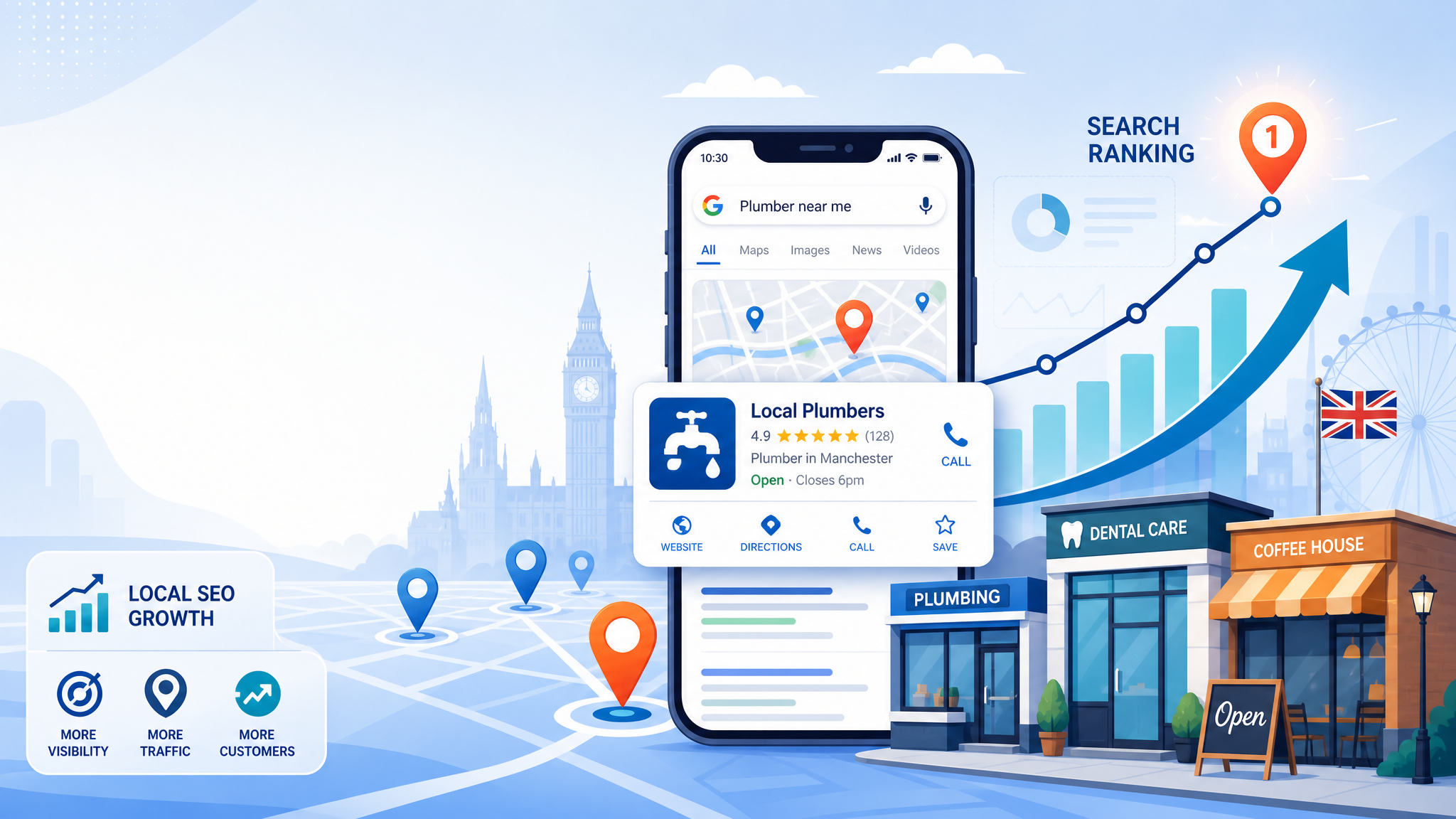
If you run a local business in the UK, ranking for broad terms like “plumber” or “solicitor” isn’t enough. The people most likely to call, book, or visit are usually searching with location, urgency, and intent baked into the query. That’s why local SEO starts with choosing the right keywords, not the biggest ones. In practice, you need a mix: core service terms, area-based phrases, long-tail problem searches, and conversion-focused keywords tied to what customers actually do next. Here’s how to build a local keyword strategy that brings in relevant traffic rather than vanity rankings.
Start With The Core Keyword Types That Drive Local Searches
Local keyword research gets easier once you stop thinking in terms of one “main keyword”. Most UK businesses need a shortlist of keyword types.
First, there are core service keywords: “emergency plumber”, “wedding florist”, “accountant”, “boiler repair”. These describe what you do.
Second, you have location keywords: city, town, borough, district, postcode area, and even neighbourhood terms. A searcher might type “dentist in Leeds”, “South London roofer”, or “garage near LS11”.
Third, there are intent keywords that signal action, such as “same day”, “open now”, “quote”, “book”, “repair”, or “call out”. These often convert better than higher-volume generic searches.
And finally, there are problem-led keywords. People don’t always search for a business category first. They search for the issue: “blocked drain overflowing”, “heating not working”, “need passport photos today”.
If you build your list around those four types, you’ll cover how local customers actually search rather than how businesses think they search.
Target Service And Product Keywords With Local Modifiers
One of the simplest and most effective moves in local SEO is pairing your service or product with a place name.
That gives you phrases like:
- “family solicitor Manchester”
- “bathroom fitter in Bristol”
- “bike shop Edinburgh”
- “boiler servicing Nottingham”
This matters because Google uses location signals heavily in local results, especially when searchers want something nearby. Even when users don’t type a town or city, Google often interprets local intent behind the query.
Start with every service you offer, then combine each one with your key service areas. If you’re a multi-service business, prioritise the services with the best margins or strongest demand first.
Be specific. “Electrician Birmingham” is useful, but “EV charger installation Birmingham” may be lower volume and far more valuable. The same goes for product-led searches. A local kitchen showroom may get more qualified traffic from “Shaker kitchens Sheffield” than from “kitchens Sheffield”.
Broad terms bring visibility. Specific local modifiers usually bring enquiries.
Use Location Variations That Match How People Search In The UK
UK local search behaviour is messy in a very human way. People don’t stick to one location format, so your keyword targeting shouldn’t either.
You’ll want to test variations such as:
- town or city name
- area or neighbourhood name
- borough or district
- county name
- postcode area
- “near me” searches
For example, a business in Greater Manchester might need pages or on-page references for “Manchester”, “Didsbury”, “Chorlton”, “South Manchester”, and sometimes even postcode-led phrasing if that reflects real search behaviour.
This is especially important in London, where users may search by borough, district, or local area rather than “London” alone. The same applies in larger cities like Glasgow, Birmingham, Leeds, and Bristol.
Use tools such as Google Search Console, Google’s autocomplete suggestions, and the “People also ask” results to spot wording patterns. Your Google Business Profile insights can help too.
The key is simple: optimise for the language customers use, not the geography label you prefer internally.
Include High-Intent Keywords For Calls, Bookings, And Visits
Not all traffic is equal. If you want leads, focus on keywords that suggest someone is ready to act.
High-intent local searches often include terms like:
- “book”
- “appointment”
- “quote”
- “same day”
- “emergency”
- “open now”
- “near me”
- “call out”
- “walk in”
A person searching “emergency locksmith Liverpool” is usually much closer to converting than someone searching “how do locks work”. That sounds obvious, but many local sites still put most of their effort into informational keywords while neglecting money terms.
This doesn’t mean you should ignore educational content. It means your core service and landing pages should be built around transactional phrases first.
If phone calls matter to your business, target call-driven queries. If bookings matter, include booking language. If footfall matters, use terms tied to visits, opening hours, or immediate availability.
In local SEO, intent is often the difference between traffic that looks nice in a report and traffic that turns into revenue.
Find Long-Tail Keywords That Reflect Real Customer Problems
Long-tail keywords are where local SEO often gets more profitable. They’re usually more specific, less competitive, and closer to the language customers actually use.
Instead of chasing only “physiotherapist York”, you might target:
- “sports injury physio York”
- “back pain physio York”
- “post knee surgery physiotherapy York”
Instead of “pest control Cardiff”, you might also target “wasp nest removal Cardiff” or “rat problem in loft Cardiff”.
These searches tend to reveal intent, urgency, and context. They also help you create pages and content that feel relevant, because they are relevant.
A good way to find them is to mine your customer-facing data: enquiry emails, phone call notes, chat logs, reviews, and FAQs. Sales and front-desk teams usually know the exact phrases customers repeat. That language is gold.
Search tools can help, but don’t rely on keyword volume alone. Some of the best local keywords appear modest on paper and deliver strong leads in reality.
Map Keywords To The Right Pages On Your Website
Choosing keywords is only half the job. You also need to assign them to the right pages so Google understands what each page should rank for.
In most cases, your structure should look something like this:
- Homepage: core brand and primary local terms
- Service pages: one main service per page
- Location pages: one area per page, where genuinely justified
- Product pages: individual product-led local opportunities
- Blog or advice content: informational and problem-based long-tail searches
Avoid stuffing multiple services and locations onto one page if they deserve separate treatment. A page trying to rank for “plumber Leeds”, “boiler repair Wakefield”, and “bathroom installation Bradford” all at once usually ends up weak for all three.
Also avoid creating thin, duplicated location pages with just the place name swapped out. Google is better than that, and users can tell.
Each page should have a clear primary keyword, a handful of natural secondary variations, and content that genuinely matches the search intent.
Review Performance And Refine Your Local Keyword List Over Time
Local keyword targeting isn’t a one-off task. Search behaviour changes, competitors shift, and Google keeps refining local results.
Review your keyword set regularly using Google Search Console, your analytics platform, call tracking, booking data, and Google Business Profile performance. Look for three things:
- which keywords are generating impressions
- which ones are producing clicks
- which ones are leading to real enquiries or sales
Sometimes a term with lower traffic will outperform a higher-volume phrase because the intent is stronger. Keep those. Expand around them.
You should also watch for new modifiers and service trends. In 2026, local searches continue to be shaped by mobile behaviour, voice search habits, and increasingly specific problem-led queries. That means your keyword list should keep evolving.
A practical routine works best: review monthly, refine quarterly, and add new pages only when there’s a clear demand signal.
The best local SEO keyword strategy isn’t the biggest list. It’s the one that keeps getting sharper.