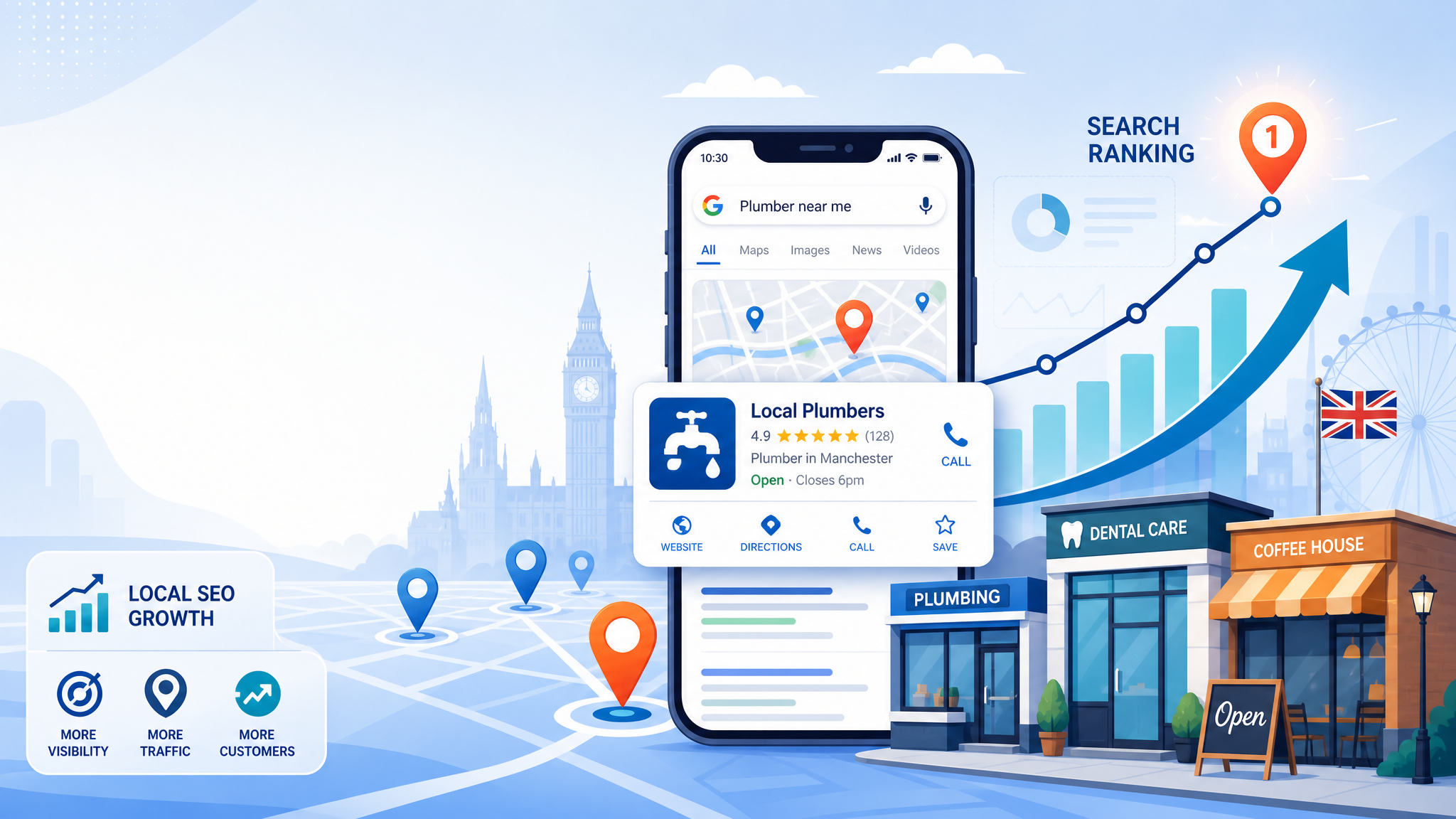
Local search keeps getting sharper. Google is better at judging proximity, relevance, credibility, and real-world usefulness, which means a lazy setup won’t carry you far in 2026. If you want to show up when nearby customers search for what you offer, you need more than a claimed profile and a few directory listings. You need a practical local SEO checklist that covers your business information, website, reviews, authority signals, and performance tracking. The good news: most wins still come from getting the fundamentals right, consistently, and a bit more thoroughly than your local competitors.
Start With A Complete And Accurate Google Business Profile
Your Google Business Profile is still the centrepiece of local visibility. For many searches, it is the first thing people see before they ever visit your website. So your first job is simple: complete every relevant field and make sure nothing is outdated.
Add your exact business name, primary category, secondary categories, phone number, website, service areas if applicable, and accurate opening hours. Upload strong, recent photos of your premises, team, products, or completed jobs. Businesses with real, useful imagery tend to look more trustworthy than profiles using only logos or stock-style visuals.
Use the business description to explain clearly what you do and where you serve. Keep it natural rather than stuffing in location keywords. If features such as booking links, products, services, FAQs, or messaging apply to your business, enable them.
And don’t just set it up once. Check your profile regularly for suggested edits, duplicate listings, wrong map pins, and outdated seasonal hours. A complete profile helps Google understand your business, but an accurate one helps customers choose you.
Keep Your NAP, Categories, Services, And Opening Hours Consistent Everywhere
Consistency is one of the least glamorous parts of local SEO, but it matters. If your business name, address, and phone number, your NAP, appear differently across your website, directories, map platforms, and social profiles, search engines get mixed signals.
Start by deciding on a single canonical version of your details. That includes abbreviations, suite numbers, formatting, and local phone numbers. Then audit your major citations: Google Business Profile, Bing Places, Apple Business Connect, Facebook, Yelp, industry directories, and local chamber or trade listings.
Look beyond NAP too. Your categories, services, opening hours, and website URL should align wherever possible. If you say you’re a “kitchen fitter” on one platform and a “home renovation contractor” on another, you risk diluting relevance unless both are clearly part of your offer.
This is especially important after a move, rebrand, phone number change, or updated opening times. One stale listing can confuse both search engines and customers. Local SEO often comes down to trust, and consistency is a trust signal.
Build Location Pages That Match Real Search Intent
If you serve more than one area, generic city-stuffed pages won’t cut it in 2026. Your location pages need to match what people in that place actually search for and what they genuinely need.
A useful location page should include the service offered, the area served, what makes your business relevant there, and clear next steps. That could mean mentioning local landmarks, neighbourhoods, response times, case studies, customer examples, parking details, or whether you offer on-site visits.
Avoid creating dozens of near-identical pages with just the town name swapped out. That’s thin content, and users can spot it instantly. Instead, build pages only for locations where you have a real presence or consistent service demand.
For example, a solicitor, dentist, or plumber should create pages around high-intent searches such as “emergency plumber in Bristol” or “family solicitor in Reading” if those services are genuinely available there. Add internal links from your main service pages, include local schema where relevant, and make each page feel earned, not manufactured.
Earn And Manage Reviews As A Local Trust Signal
Reviews influence rankings, clicks, and conversions. They’re not just social proof: they help search engines understand that your business is active, reputable, and relevant in a local market.
Make review generation part of your normal process. Ask satisfied customers at the right moment: after a completed job, successful appointment, or positive support interaction. Keep the request simple, direct, and easy to action. A short follow-up email or text with your review link often works better than a vague “please leave us feedback” message.
Quality matters as much as quantity. Reviews that mention specific services, locations, or outcomes are especially valuable. They give future customers detail and reinforce local relevance.
Just as important, respond to reviews. Thank people for positive feedback and address negative comments calmly and professionally. A defensive reply can do more damage than the original complaint. You won’t win every customer, but you can show that you’re responsive and credible. In local SEO, that counts for a lot.
Strengthen Local Authority With Relevant Links, Citations, And Community Mentions
Local authority is built through recognition. Google looks at whether other trusted sources mention or link to your business, especially within your area or industry.
Start with foundational citations on reputable directories and sector-specific platforms. Then go beyond directories. Look for local links that actually mean something: chambers of commerce, local news sites, business associations, schools, charities, event sponsorships, and supplier or partner websites.
Community involvement can quietly become an SEO advantage. Sponsoring a local football club, speaking at a business event, supporting a fundraiser, or contributing expert commentary to a regional publication can all lead to relevant mentions and links.
Not every citation needs a link, and not every link needs high domain authority to be useful. Relevance is the key. A mention from a respected local source can send a stronger local signal than a random national directory nobody uses.
If your competitors keep appearing in local press roundups or business listings and you don’t, that’s a gap worth closing.
Make Your Website Technically Ready For Local Search
Even the best local signals can be undermined by a weak website. If your site is slow, confusing on mobile, or missing key local information, users bounce and rankings suffer.
Start with the basics: fast loading times, mobile-friendly design, HTTPS, crawlable pages, and clear site architecture. Most local searches happen on phones, often when people are in a hurry, so your contact details, directions, and calls to action should be obvious without endless scrolling.
Include your NAP in the footer or contact page, embed a map where appropriate, and add structured data such as LocalBusiness schema to help search engines interpret your information. Make sure title tags, meta descriptions, headings, and on-page copy reflect real local intent rather than awkward keyword stuffing.
Also check indexation issues, broken links, duplicate content, and redirect errors. Technical SEO is rarely the flashy part of a local SEO checklist, but it supports everything else. If Google can’t access, interpret, and trust your site properly, your local visibility will hit a ceiling.
Track Local SEO Performance And Refresh Your Checklist Regularly
A local SEO checklist is not a one-off exercise. Search results change, competitors improve, customer behaviour shifts, and your own business details evolve. What worked last year can go stale faster than you’d think.
Track the metrics that actually reflect local performance: Google Business Profile views, calls, direction requests, website clicks, local keyword rankings, organic traffic to location pages, and conversions by area. If possible, segment data by town, service, or branch so you can see where momentum is building and where pages need work.
Review your profile, citations, reviews, and location pages on a schedule, monthly for core checks, quarterly for deeper audits. Update photos, add new services, revise hours, and refresh outdated local content.
Keep an eye on the search results themselves too. Are map pack listings showing more review-heavy businesses? Are local service pages, directories, or forums taking up more space? The best local SEO strategy in 2026 is the one you keep refining before your competitors do.