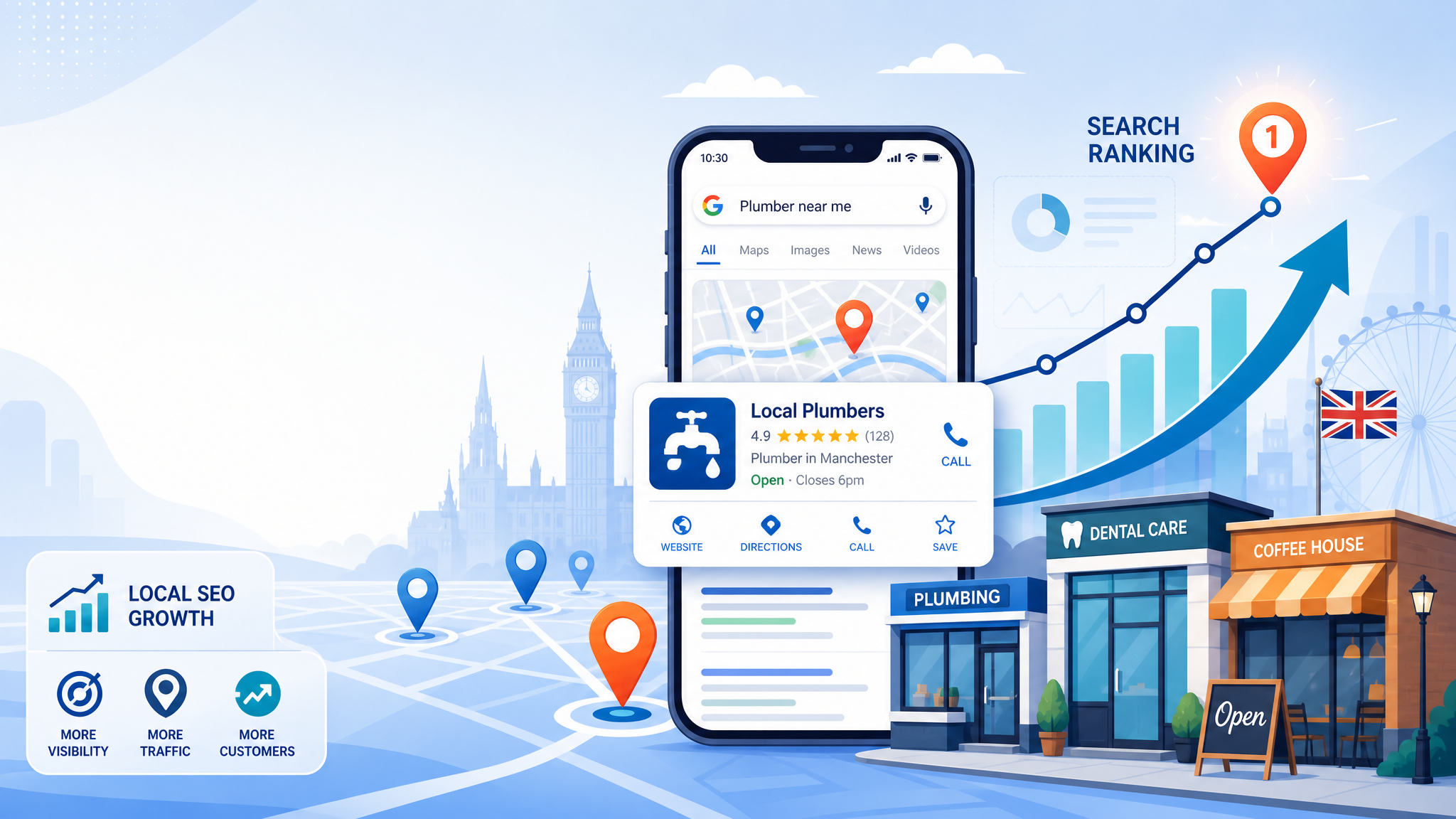
If you run a service area business, local SEO can feel slightly unfair. You serve customers across multiple towns, but you may not have a staffed office in each one. So how do you show up when someone nearby searches for your service? The short answer: by sending clear, trustworthy local signals across your Google Business Profile, website, reviews, and off-site mentions. The good news is that ranking well in local search isn’t about gaming the map pack anymore. In 2026, it’s about relevance, proximity, and trust, built in a way that actually reflects how your business operates in the real world.
Understand How Local Search Works For Service Area Businesses
Google looks at three broad signals in local search: relevance, distance, and prominence. For a service area business, that creates an interesting challenge. You may be highly relevant and well reviewed, but if your business profile or website doesn’t clearly connect you to the places you serve, you’ll struggle to rank consistently.
Unlike storefront businesses, you usually can’t rely on footfall or a visible high-street address. Instead, Google tries to understand where you operate through your service area settings, your website content, customer review locations, local backlinks, and citation consistency.
That means your goal isn’t to “rank everywhere”. It’s to build enough evidence that you’re a legitimate choice in the areas you actually serve. And yes, that takes a bit more nuance than stuffing town names into every paragraph. Local search has got better at spotting that sort of thing.
Set Up And Optimise Your Google Business Profile Properly
Your Google Business Profile is still the centre of gravity for local visibility. If it’s incomplete, inaccurate, or weakly optimised, everything else becomes harder.
First, make sure your business name matches your real-world branding exactly. Don’t add keywords unless they’re genuinely part of your trading name. Then check that your primary category is the closest possible match to your core service. Secondary categories matter too, but they should reflect real services, not every possible variation you’d like to rank for.
Keep your phone number, website URL, opening hours, and business description accurate. Add services individually where relevant. Use high-quality photos of your team, vans, completed work, equipment, and branded materials. Profiles with fresh, credible activity tend to earn more trust from both users and Google.
Choose Service Areas, Categories, And Business Details Carefully
Be realistic with your service areas. Google allows you to define where you serve, but adding every town within 100 miles won’t magically improve rankings. In fact, broad, messy targeting can dilute relevance.
Choose the locations you genuinely cover and can serve well. Prioritise your strongest commercial areas rather than trying to blanket a whole region. Your selected areas should also align with the locations referenced on your website and in your reviews.
Categories deserve extra care. Your primary category often has a bigger ranking impact than most small tweaks combined. If you’re a plumber, choose plumber, not something adjacent unless that’s your real main offer. Then use secondary categories for complementary services.
Also, if you hide your address, as many service area businesses do, make sure the rest of your profile is especially robust. That means strong photos, regular updates, complete services, and a healthy flow of recent reviews.
Build Location Relevance On Your Website Without Creating Thin Pages
Your website should support your local search presence, not just repeat your Google Business Profile. The biggest mistake service area businesses make here is churning out dozens of near-identical location pages with swapped town names. Those pages are thin, unhelpful, and increasingly easy for Google to discount.
Instead, build a sensible structure. Create strong service pages for your core offers, then add location relevance in ways that are genuinely useful: areas served sections, case studies, testimonials mentioning places, and FAQs about response times or coverage.
If you do create local landing pages, make each one unique. Include real jobs completed nearby, local customer problems you solve, travel coverage, photos, and meaningful internal links. Schema markup for local business and service information can help search engines interpret the page more clearly too.
In other words, prove local relevance, don’t just claim it.
Strengthen Trust With Reviews, Local Links, And Consistent Citations
Trust signals often separate businesses that appear occasionally from those that rank steadily. Reviews are a major part of that. Encourage customers to mention the service they received and, naturally, the location. A review saying “great emergency boiler repair in Woking” is more useful than “brilliant service”.
You don’t need to script reviews, and you shouldn’t. But you can ask in a way that prompts detail. Respond to reviews as well. It shows activity and gives you another chance to reinforce relevance naturally.
Local links matter too. Think chambers of commerce, local trade associations, sponsorships, suppliers, community organisations, and regional news mentions. A handful of genuine local backlinks can do more than dozens of low-quality directory submissions.
Citations still count, just less dramatically than they once did. Keep your business name, phone number, and website details consistent across key directories. Inconsistencies create noise, and local SEO really doesn’t need more noise.
Create Local Signals Through Content, Photos, And Real-World Activity
Local SEO isn’t only about static pages. It also benefits from ongoing evidence that your business is active in the places you target.
Publish useful local content when there’s a real reason to. That could be seasonal advice tied to your area, project spotlights, neighbourhood-specific service tips, or answers to common local questions. If you’re an electrician, for example, content about older housing stock in specific towns can be far more convincing than generic blog fluff.
Photos are underrated. Geographically relevant job photos, branded vehicles in recognisable service areas, before-and-after shots, and team images all reinforce legitimacy. Upload them to your website and Google Business Profile regularly.
And don’t overlook offline activity. Sponsoring local events, joining business groups, partnering with nearby suppliers, or being mentioned in community publications all create signals that spill into search visibility. Real-world presence has a habit of showing up online eventually.
Track Rankings, Leads, And Profile Performance To Improve Results
If you’re not measuring results properly, local SEO becomes guesswork. And guesswork is expensive.
Start by tracking rankings at postcode, town, or grid level rather than relying on one generic search result. Local rankings vary hugely by location, especially for service area businesses. A position check from your office won’t tell you how visible you are across your full territory.
Then measure what actually matters: calls, form submissions, booked jobs, directionless but high-intent profile views, and landing page conversions. Google Business Profile insights, GA4, Search Console, and call tracking can give you a more complete picture when used together.
Look for patterns. Which service pages attract impressions but not enquiries? Which towns generate profile views but weak clicks? Which review growth periods correlate with better map visibility?
That’s where improvement happens. Not from random tweaks, but from seeing what’s working and doing more of it.