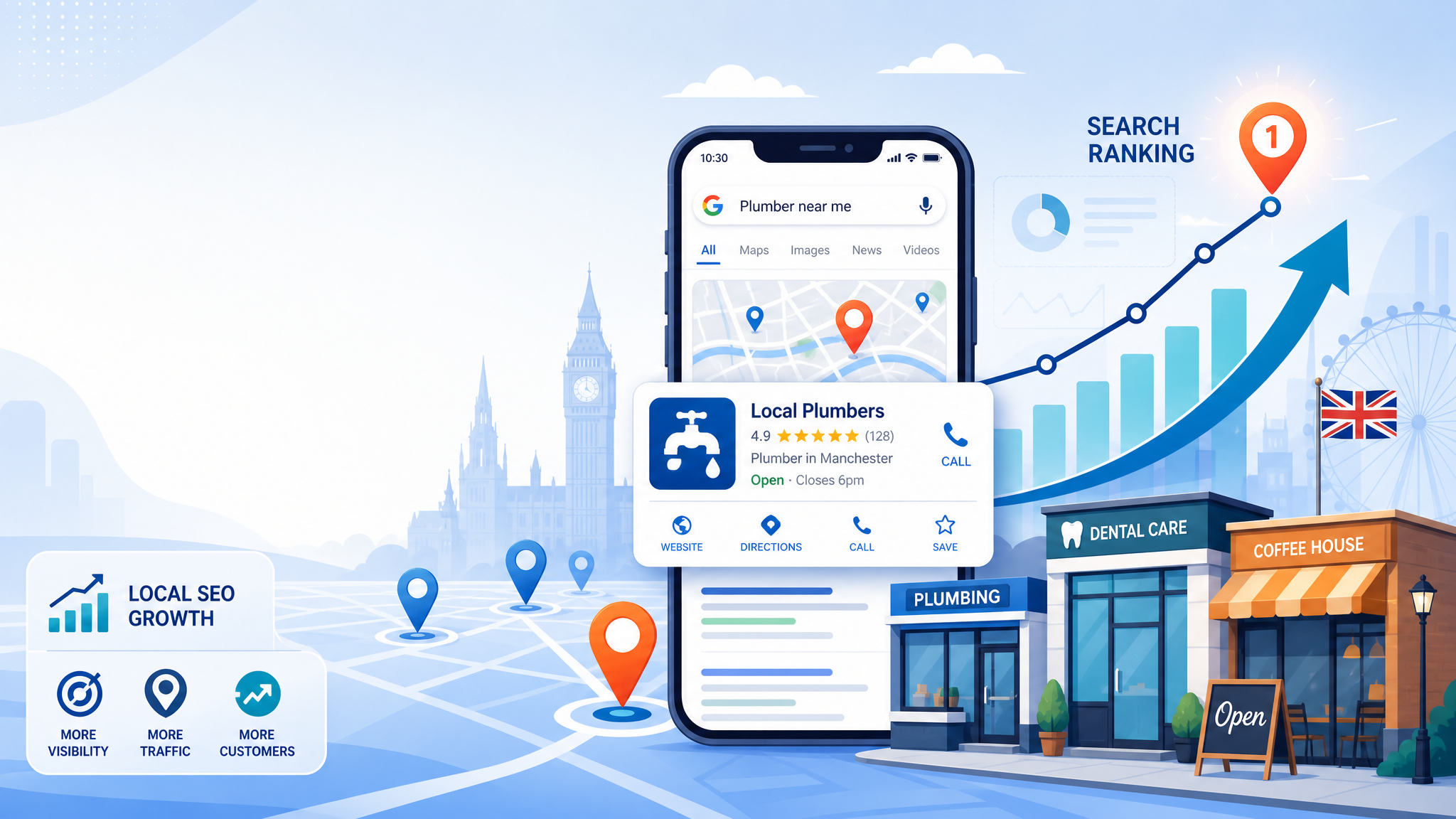
If you run a local business, your name, address, and phone number might seem like basic admin details. But in local SEO, they carry real weight. NAP consistency means your core business information appears the same everywhere online, from your Google Business Profile to directories, social profiles, and local citations. And yes, it still matters in 2026. Search engines use these signals to verify that your business is legitimate and trustworthy. Customers do too. If your details are inconsistent, you make it harder for both Google and real people to find, trust, and contact you.
What NAP Consistency Means In Local SEO
NAP stands for Name, Address, and Phone number. NAP consistency means these details are listed accurately and in the same format across the web.
In practical terms, that includes your Google Business Profile, Bing Places, Apple Business Connect, your website, social media accounts, industry directories, map platforms, and local business listings. If your company appears as “Smith & Sons Plumbing Ltd” in one place, “Smith and Sons Plumbing” in another, and uses two different phone numbers elsewhere, that creates conflicting signals.
Small variations are sometimes harmless, but repeated discrepancies can weaken confidence in your business data. Local SEO works partly on trust and verification. Search engines want to connect one real-world business to one reliable digital identity. NAP consistency helps them do that.
It also supports citation building, local map visibility, and contact accuracy. In short, it is one of the foundations of a strong local search presence.
Why Search Engines And Customers Rely On Accurate Business Details
Search engines need dependable business data to decide whether to show your company in local search results. When your NAP details match across authoritative sources, it strengthens entity confidence. Google may not treat citations the way it did a decade ago, but consistent data still helps it validate your business.
That matters for searches with local intent, especially when someone is comparing options quickly on a mobile phone.
Customers rely on the same information for more obvious reasons. They want to know:
- whether you are open in the right location
- which number to call
- whether your listing is current
- if your business looks credible
If a customer finds one address on your website and another on a directory, hesitation creeps in. And hesitation often means they choose a competitor. Accurate business details reduce friction. They make it easy for people to trust what they see and take the next step, whether that is calling, visiting, or booking.
How Inconsistent NAP Data Hurts Local Rankings And Trust
Inconsistent NAP data can create both SEO problems and customer experience problems.
On the SEO side, conflicting information makes it harder for search engines to confirm your business identity. That can dilute ranking signals, create duplicate listings, and weaken your visibility in the local pack or on map results. If old addresses, tracking numbers, or outdated trading names are still floating around online, they can muddy the picture.
On the customer side, the damage is often more immediate. People may call the wrong number, visit the wrong location, or assume your business is no longer operating. Even minor inconsistencies can look sloppy. For a local business, trust is fragile.
This is especially risky after a move, rebrand, merger, or phone system change. One forgotten directory listing can keep spreading bad data to other platforms. That is why NAP consistency is not just a one-off setup task. It is part reputation management, part local SEO hygiene.
Where NAP Information Needs To Stay Consistent
Your NAP information should be aligned anywhere your business is mentioned online. Some locations matter more than others, but the goal is broad consistency.
Start with the essentials:
- your website, especially the homepage, contact page, and footer
- your Google Business Profile
- Bing Places and Apple Business Connect
- major directories such as Yelp, Yell, Thomson Local, and industry-specific sites
- social media profiles including Facebook, LinkedIn, and Instagram
- map apps, review sites, and local chamber or association listings
You should also check structured citations from data aggregators and niche local directories relevant to your trade.
If you have multiple locations, each branch needs its own precise details. Do not mix location phone numbers or reuse the wrong landing pages. Consistency does not mean every listing must look word-for-word identical in formatting, but the core business details should clearly refer to the same place and contact information.
How To Audit Your Existing Citations And Business Listings
A proper NAP audit starts with gathering your official business details exactly as they should appear. Write down your preferred business name, address, local phone number, website URL, and any location-specific variations you actually use.
Then search for your business manually. Look up old names, previous phone numbers, and past addresses too. You are trying to uncover outdated citations as well as active ones.
Review your presence on:
- search engines and map platforms
- key local and national directories
- trade-specific citation sites
- social media profiles
- review platforms
Create a simple spreadsheet with columns for platform, listed NAP, status, login access, and action needed. That saves a lot of backtracking later.
Pay close attention to duplicates. Duplicate listings are common and can split reviews, confuse users, and send mixed signals to Google. If your business has moved or changed numbers, prioritise high-authority platforms first, then work through the rest methodically.
Best Practices For Maintaining NAP Consistency Over Time
The easiest way to maintain NAP consistency is to treat your official business details as a controlled asset, not something each team member writes differently.
Keep a master record with your exact business name, address format, primary phone number, opening hours, and website URL. When anyone updates a profile or submits a listing, they should use that version.
A few practical habits help:
- update major platforms immediately after any business change
- use a local phone number where possible
- keep location pages on your website accurate
- remove or merge duplicate listings
- review your citations every few months
- monitor third-party edits on platforms like Google Business Profile
If you manage several branches, assign ownership clearly. One messy handover is often how inconsistent listings multiply.
And if you use call tracking, do it carefully. Dynamic call tracking on your website is usually fine, but your core public business number should remain stable across primary listings unless you know exactly how the setup affects citations.
Common NAP Mistakes Local Businesses Should Avoid
Some NAP issues are obvious. Others sneak in over time.
One common mistake is changing your business name slightly across platforms to squeeze in extra keywords, such as adding a service or town name where it does not belong. That can create inconsistency and may even breach platform guidelines.
Another is forgetting old listings after moving premises or switching phone providers. Those abandoned citations often keep ranking for branded searches, which is not ideal.
Other frequent mistakes include:
- using a call tracking number as the main number everywhere
- creating duplicate Google Business Profiles
- pointing multiple locations to the same contact details
- leaving social profiles half-complete or outdated
- ignoring aggregator sites that feed other directories
The fix is usually not glamorous. It is admin work, regular checks, and a bit of patience. But it pays off. Clean, consistent NAP data helps search engines trust your business and helps customers reach you without second-guessing what they are seeing.