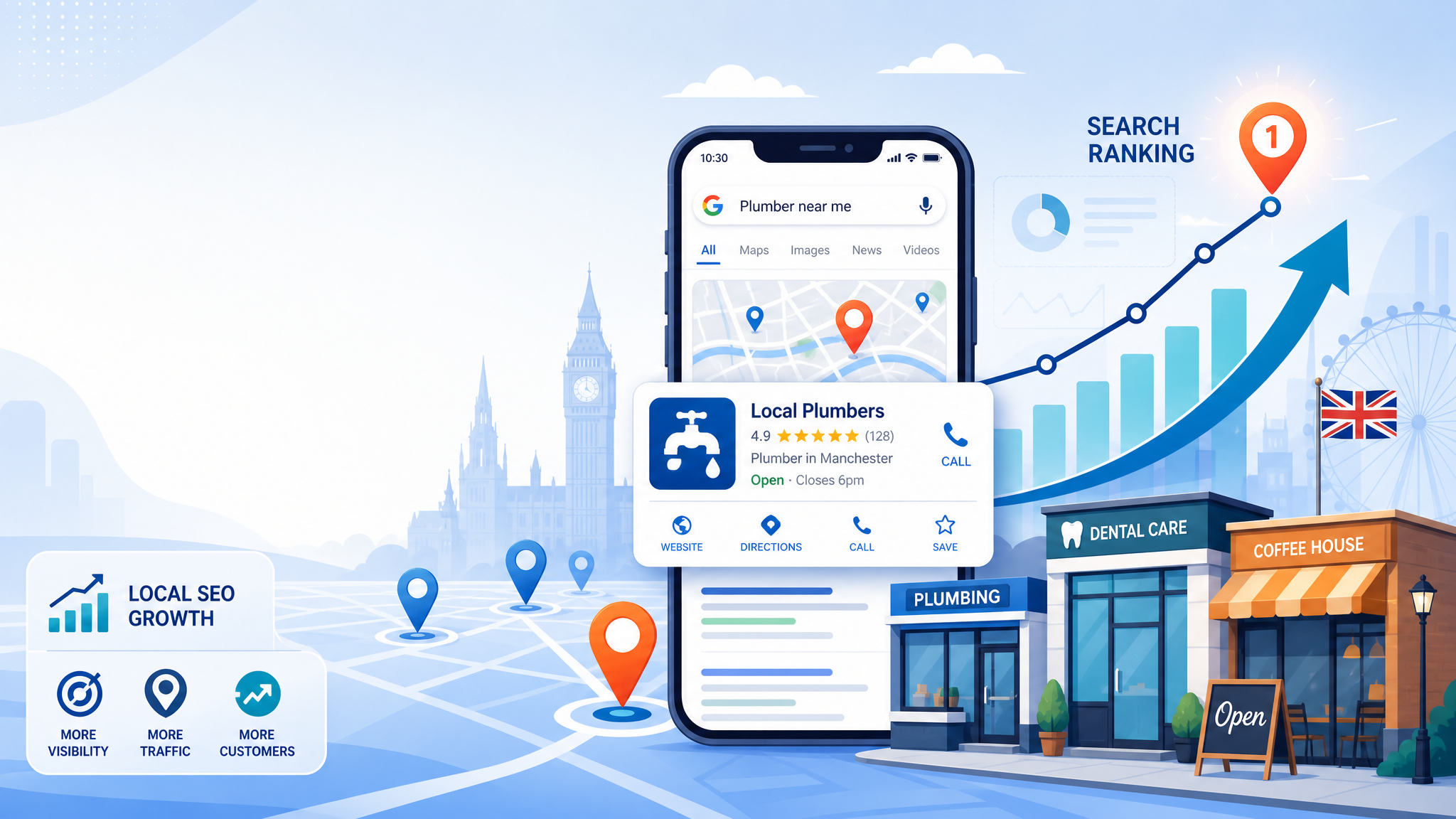
If you want more local calls, direction requests, and ready-to-buy customers, showing up higher on Google Maps matters. In the UK, Google Business Profile results often appear before traditional organic listings, especially on mobile. That means your visibility in the map pack can directly affect leads and footfall. The good news? You don’t need to game the system. You need to send clearer local signals than your competitors. Here’s how to rank higher on Google Maps in the UK using practical, up-to-date steps that improve relevance, distance, and prominence.
Understand How Google Maps Rankings Work In The UK
Google Maps rankings are largely shaped by three factors: relevance, distance, and prominence. Google itself says these signals determine which local businesses appear for nearby searches.
Relevance is how closely your Google Business Profile matches what someone is looking for. If your profile says “accountant” but you mainly want to rank for “tax adviser in Manchester”, your setup may be too vague.
Distance is how near you are to the searcher or the location used in the query. You can’t control where people search from, but you can make your geographic signals stronger.
Prominence is your authority and trust. Reviews, local links, citations, brand mentions, and a strong website all help.
In practice, ranking higher on Google Maps in the UK means improving all three. Don’t obsess over one trick. A well-built local presence usually beats a half-optimised profile with loads of shortcuts.
Complete And Optimise Your Google Business Profile
Your Google Business Profile is the foundation of local map visibility. If it’s incomplete, inconsistent, or lightly managed, you’re making Google work harder than it should.
Start with the basics:
- Use your real business name only
- Add your correct UK address, phone number, and website
- Set accurate opening hours, including bank holiday updates
- Write a clear business description with natural local keywords
- Add your services or products in detail
Make sure your profile is verified and fully filled out. Profiles with missing categories, weak descriptions, or outdated hours often underperform.
You should also use features many businesses ignore: Q&A, appointment links, accessibility details, and attributes such as women-led, wheelchair-accessible, or online appointments where relevant.
And keep it honest. Keyword stuffing your business name with phrases like “Best Emergency Plumber London” can trigger suspensions. In local SEO, stability matters almost as much as optimisation.
Choose The Right Primary Category And Service Areas
Your primary category is one of the strongest ranking signals in Google Maps. Choose the single option that best matches your core service, not the broadest or most flattering one.
For example, if you’re mainly doing cosmetic work, “Cosmetic dentist” may outperform simply choosing “Dentist”. If you’re a loft specialist, “Loft conversion service” may be better than “Builder”, if available.
Then add secondary categories only where they genuinely fit. Too many loosely related categories can dilute relevance.
For service-area businesses in the UK, be careful with service areas. Adding every nearby town won’t magically make you rank everywhere. Google still relies heavily on your actual business location and overall authority.
A better approach is to:
- Set realistic service areas you actually cover
- Create supporting local landing pages on your website
- Mention those areas naturally in your services and updates
Think precision, not sprawl. The right category often moves rankings faster than bigger changes elsewhere.
Build Consistent Local Citations Across UK Directories
Citations are mentions of your business name, address, and phone number across trusted websites. They help Google confirm that your business is legitimate and located where you say it is.
For UK businesses, consistency matters more than volume. Your details should match across your website, Google Business Profile, and key directories such as Yell, Thomson Local, Scoot, Yelp, Bing Places, and relevant industry-specific sites.
Watch out for small differences that create confusion:
- “Road” vs “Rd”
- Old phone numbers
- Tracking numbers used inconsistently
- Different postcode formatting
- Business name variations
A few strong, accurate citations beat dozens of messy ones.
You should also look beyond general directories. Local chambers of commerce, trade associations, supplier listings, and local news mentions can strengthen prominence. If you serve a specific county or city, local relevance counts.
Do a citation clean-up at least once or twice a year. Old data lingers online for ages, and it can quietly hold rankings back.
Get More High-Quality Reviews And Respond The Right Way
Reviews are one of the clearest trust signals in Google Maps SEO. They influence click-through rates, customer confidence, and often local rankings too.
The goal isn’t just “more reviews”. It’s recent, genuine, detailed reviews from real customers. A steady flow looks better than twenty reviews in one week and nothing for six months.
Ask at the right moment: after a completed job, successful delivery, or positive customer interaction. Make it easy by sending a direct review link.
Encourage customers to mention specific services and locations naturally. A review saying, “Great boiler repair in Leeds, arrived the same day,” gives Google more context than “Brilliant service”.
Then respond. Thank happy customers in a natural way, and reply calmly to negative reviews. Don’t get defensive, even when you’re tempted. A measured response shows professionalism and can improve trust with future searchers.
One more thing: never buy reviews. In the UK, fake review practices can damage both rankings and reputation.
Improve Your Website’s Local SEO Signals
Your website still plays a major role in how to rank higher on Google Maps. Google cross-checks your site to verify what your business does, where you operate, and whether you’re credible.
At minimum, make sure you have:
- A clear contact page with matching NAP details
- Location or service-area pages for key towns or boroughs
- Title tags and headings with local intent
- Embedded Google Map on relevant pages
- Strong mobile usability and fast load times
LocalBusiness schema can also help search engines understand your business details. It’s not magic, but it supports clarity.
If you operate in multiple UK locations, avoid thin duplicate pages with only the town name swapped out. That rarely works well. Build pages with unique information, local proof, testimonials, case studies, and service details.
And don’t ignore backlinks. Links from local publications, community sites, sponsorships, and nearby business organisations can improve the prominence that feeds map visibility.
Strengthen Local Relevance With Photos, Posts, And Ongoing Updates
A neglected profile sends a signal too, just not a good one. Businesses that actively manage their Google Business Profile often create stronger engagement and fresher relevance.
Upload real photos regularly: your premises, team, vehicles, completed work, menus, treatment rooms, before-and-after projects, whatever fits your business. Geographically relevant images can help reassure both users and search engines that you’re active in the area.
Use Google Posts to share updates, offers, events, or seasonal services. They’re not usually a direct ranking breakthrough, but they can improve profile activity and conversion.
You should also keep practical details current:
- Opening hours
- Services
- Holiday changes
- New phone numbers
- Updated photos
This is especially important in competitive UK local markets where small trust signals can separate the top three map listings from everyone else.
If your competitors set up their profile once and forget it, ongoing updates give you an edge. Not flashy. Just effective.