If you run a business that serves a specific town, city, or region, local SEO is no longer a nice extra. It’s one of the main ways people find you when they need a service nearby and need it quickly. Whether you’re a solicitor in Leeds, a plumber in Bristol, or a dental practice in Manchester, your visibility in local Google results can shape how many calls, bookings, and shop visits you get. And in 2026, with mobile search, map results, and reviews driving more buying decisions, local SEO matters more than ever for UK businesses.
What Local SEO Means and How It Differs From Traditional SEO
Local SEO is the process of improving your online visibility so your business appears when people search for products or services in a specific area. Think searches like “accountant near me”, “best café in York”, or “emergency electrician Glasgow”. The goal is to show up in Google Maps, the local pack, and location-based organic results.
Traditional SEO is broader. It focuses on helping your website rank for national or general searches, often without strong geographic intent. If you sell software across the UK, traditional SEO may be your priority. But if you rely on customers in a local catchment area, local SEO becomes essential.
The biggest difference is intent. Local searchers usually want to act soon. They’re not just browsing: they’re comparing nearby options, checking reviews, looking at opening times, and deciding who to contact. That makes local SEO especially valuable because it targets people who are already close to making a decision.
Why Local SEO Matters for UK Businesses
For UK businesses, local SEO matters because it connects you with high-intent customers at the exact moment they’re searching. Someone looking for a roofer in Newcastle or a physio in Birmingham usually isn’t doing idle research. They want a reliable local option now.
That means local visibility can directly affect leads and revenue. If your business appears prominently in map results, has strong reviews, and presents accurate information, you’re far more likely to win clicks and calls than a competitor who barely shows up.
It also levels the playing field. You don’t need the budget of a national chain to compete in your area. A well-optimised local presence can help an independent business outrank bigger brands for nearby searches.
And there’s a trust factor. UK consumers often judge businesses quickly based on ratings, photos, and consistency across the web. Local SEO helps you control those signals, so your business looks credible before a customer even reaches your website.
How Local Search Works in Google Results
Google uses a mix of relevance, distance, and prominence to decide which local businesses to show. In simple terms, it asks three questions: does this business match the search, is it close enough, and does it appear trustworthy and well-known?
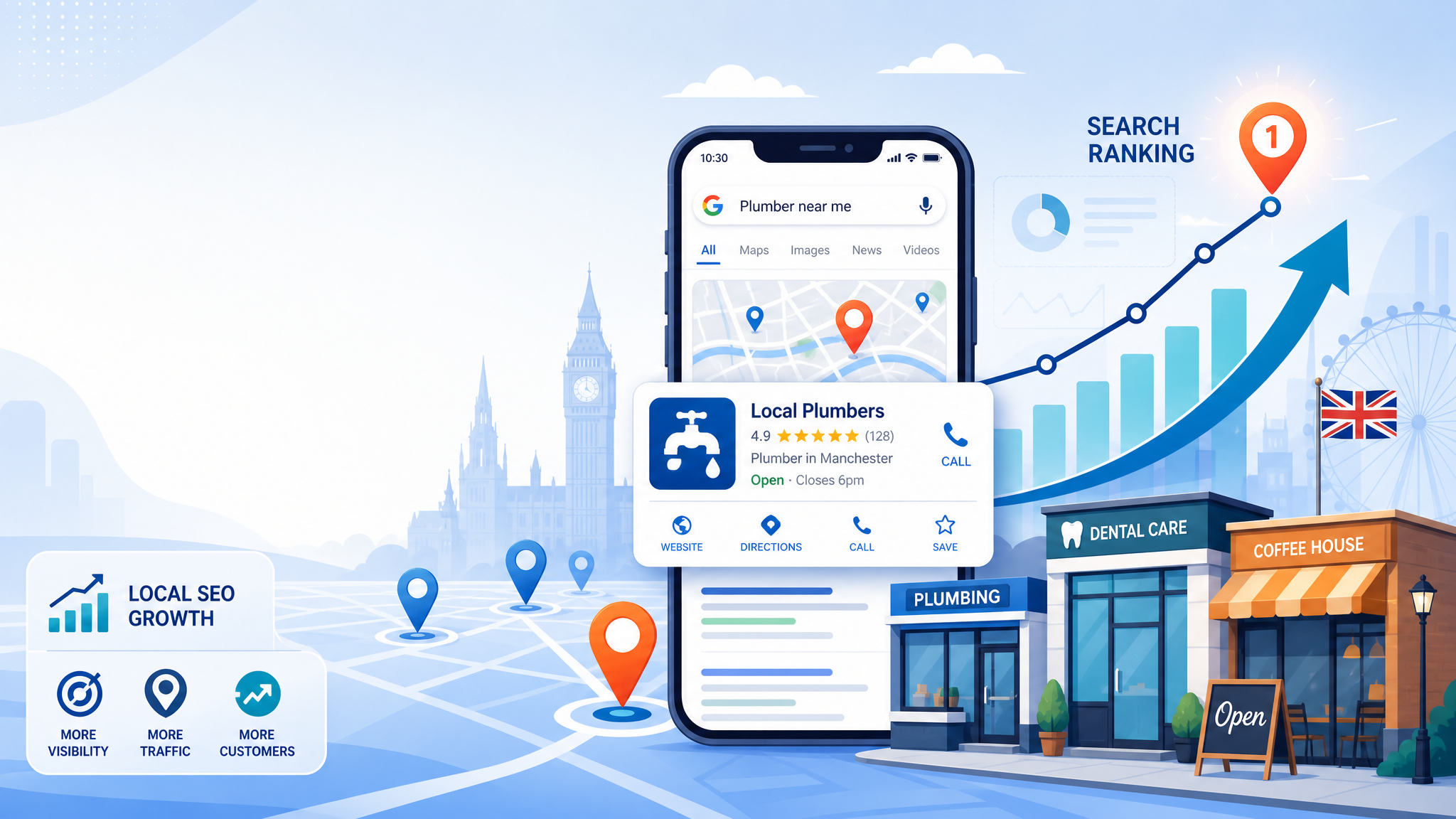
That’s why local results often look different from standard organic results. For many searches, Google shows a map and a shortlist of businesses before the usual blue links. This is often called the local pack. Below that, you may still see normal website listings, directories, and business profiles.
Your location settings, the wording of the query, and your physical proximity can all affect what appears. So can the strength of your Google Business Profile, review quality, website content, and citations across trusted directories.
In practice, local search is not just about having a website. It’s about giving Google enough clear, consistent evidence that your business is active, relevant to the area, and worth showing to nearby users.
The Core Elements of a Strong Local SEO Presence
A strong local SEO presence comes from several pieces working together. You can’t rely on one tactic alone and expect lasting results. Google wants to see a real business with a clear service area, a trustworthy reputation, and information that stays consistent wherever it appears online.
For most UK businesses, the foundation starts with your Google Business Profile, then extends to your website, your reviews, and your local citations. These elements reinforce each other. If your profile is active but your site has no location signals, you’re leaving opportunities on the table. If your website is strong but your business details differ across directories, Google may have less confidence in your information.
The businesses that perform best locally usually get the basics right, then keep them updated. That sounds simple, but plenty of firms still neglect it.
Google Business Profile, Reviews, and Local Trust Signals
Your Google Business Profile is one of the most important assets in local SEO. It influences whether you appear in map results and shapes the first impression customers get. Your profile should include the right business category, accurate opening hours, services, photos, contact details, and a clear description written in natural language.
Reviews matter just as much. A steady flow of genuine reviews, especially when you reply to them, sends strong trust signals to both Google and potential customers. People notice recency, not just star ratings. Ten reviews from three years ago won’t look as reassuring as fresh feedback from the last month.
Other trust signals help too: consistent directory listings, local backlinks, mentions from regional websites, and clear proof that you operate in the area. In short, Google wants evidence that your business is real, reputable, and locally relevant.
Website Content, Location Pages, and Consistent Business Details
Your website still plays a central role in local SEO. It should clearly explain what you do, where you operate, and why customers in that area should choose you. If you serve multiple towns or boroughs, dedicated location pages can help, provided they’re genuinely useful and not thin copy with the place name swapped out.
Strong local pages often include service details, testimonials from nearby clients, FAQs, local landmarks or coverage information, and clear calls to action. This gives users confidence and gives Google more context.
Consistency is crucial too. Your business name, address, and phone number should match across your website, Google Business Profile, and major directories. Even small differences can create confusion. For UK businesses with multiple branches, getting this right across every location takes discipline, but it’s worth it. Consistent details make it easier for search engines to trust the data they find.
Common Local SEO Mistakes UK Businesses Should Avoid
A common mistake is treating local SEO as a one-off setup job. You create a profile, add your address, and assume you’re done. In reality, local SEO needs regular attention. Reviews need responses, opening hours need updating, and website content can go stale.
Another issue is inconsistency. Different phone numbers, old addresses, duplicate listings, or outdated branch details can weaken your local signals. So can choosing the wrong Google Business category or stuffing location keywords unnaturally into your pages.
Some businesses also create poor-quality location pages for every nearby town, even when they have no real presence there. That rarely helps for long. Google is better at spotting thin, repetitive content than it used to be.
The smarter approach is straightforward: keep your information accurate, build genuine local authority, and focus on being useful to people in the areas you actually serve. That’s what strong local SEO looks like in 2026.